Nobody Told Us the Job Market Was Getting a Complete Makeover
Yana Immis
Last week some friends and I ended up talking about careers and what we're each planning to do. Most of them had the same answer: business administration. Safe, their parents said. I didn't know what to say back. Anything honest would've come out sounding like a warning. But that's not even the right question
The real question isn't what to study. It's what the world is going to need — and from where I'm standing, the answer is shifting faster than most school curriculums are willing to admit.
A report published earlier this year by the World Economic Forum put a number on it. By 2030, roughly 170 million jobs that don't fully exist yet will be in demand. And about 92 million jobs that exist right now will be gone. Not declining — gone. That's almost a quarter of today's entire global workforce, either retraining or out of luck.
The usual suspects are behind it. AI doing in seconds what used to take a person a week. A planet running low on clean water and arable land. A population growing to almost 10 billion. Climate patterns changing the way farming, energy, and construction have worked up to now. None of this is news, exactly. But the speed at which it's landing on the job market is something else.
What I find genuinely interesting — and what nobody seems to talk about at career fairs — is where the new jobs are actually coming from.

Take medicine
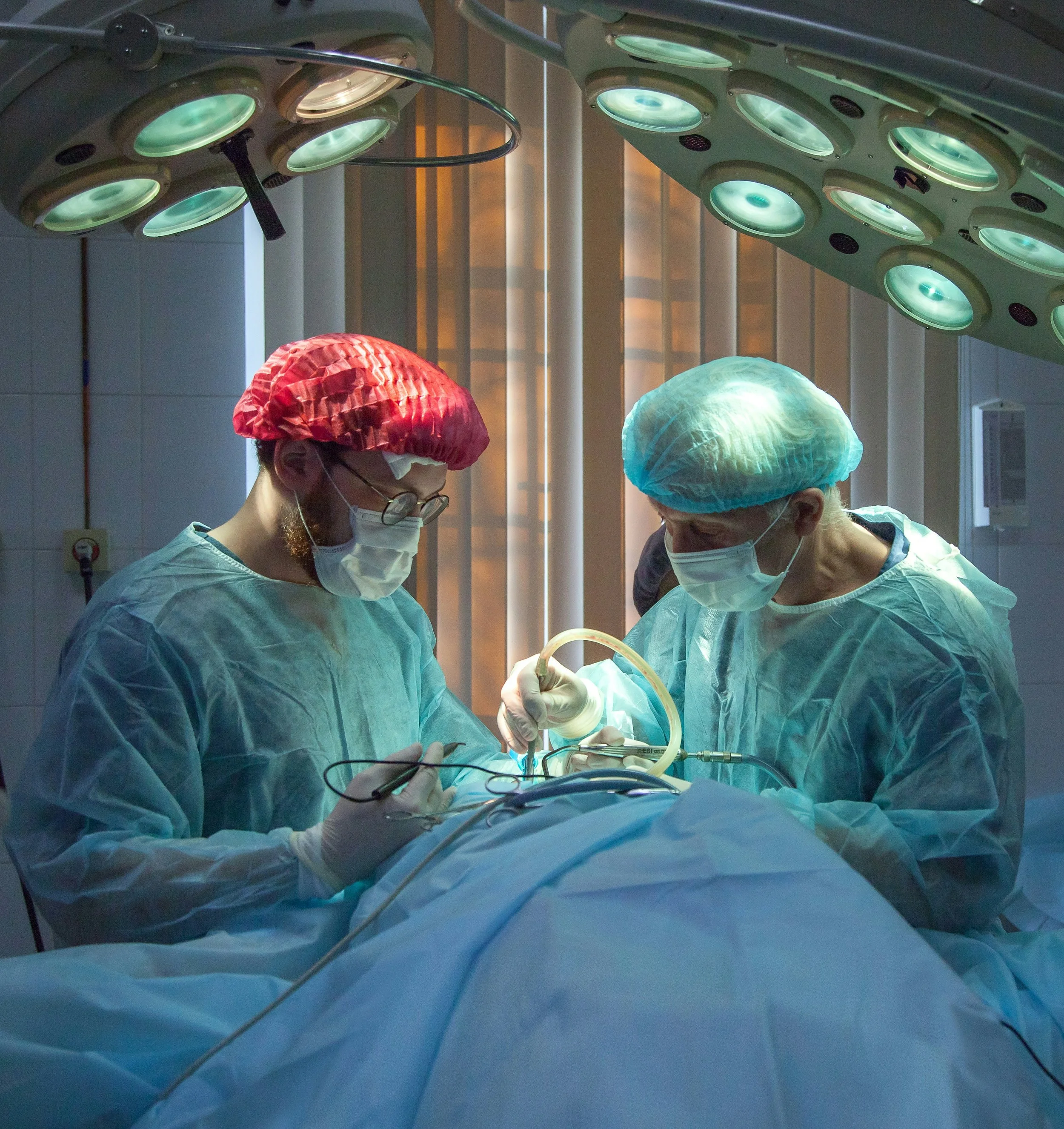
Sequencing someone's entire genome, meaning every genetic instruction that makes a person who they are, now costs around $80. A few years ago that number was in the thousands. That one price drop is quietly setting off a chain reaction in how healthcare works. Doctors are starting to catch diseases before a patient feels a single symptom. AI is reading medical scans and catching tumors with 94% accuracy. Last year, a surgeon sitting in China operated on a patient in Morocco — twelve thousand kilometers away — using a robotic system with almost no signal delay. The patient recovered fine.
CRISPR is a tool that lets scientists edit DNA the same way you'd fix a typo in a text message. Find the bad instruction, delete it, replace it with the correct one. Late 2023 was when the FDA approved using it on actual human patients for the first time — specifically for a blood disorder that, until then, people just had to live with their whole lives.
The 3D bioprinting thing I genuinely had to look up twice before I believed it. In 2022, a woman born without a properly formed ear had one rebuilt using her own cells. Not a prosthetic. Not a donor. Her cells, grown and printed into the shape of an ear, then surgically attached. That happened.
All of this needs people. Genetic engineers. Bioprinting technicians. Surgeons trained to operate robotic systems the way a skilled gamer handles a controller. And cybersecurity specialists focused entirely on hospitals, which matters more than it sounds — in 2020, hackers took down a clinic's servers in Germany and a patient died because she couldn't receive treatment in time.
Let’s bring some light to something nobody is noticing

The UN projects 9.7 billion people on this planet by 2050. That means producing somewhere between 60 and 70 percent more food than we do right now. Which would be fine if we had unlimited water — but we don't. Agriculture already burns through somewhere between 70 and 90 percent of global fresh water. Four in ten people alive today live somewhere that's already running short on it.
What's interesting is that nobody's sitting around waiting. Warehouses in Tokyo and New Jersey are already growing lettuces in stacked rows under LED lights, no soil, a fraction of the water of a traditional farm. Chicken that never came from a chicken — grown from cells in a lab — is already on menus in Singapore. Wheat designed at the genetic level to survive a drought is being tested right now in fields across Africa.
And then there's John Deere. Yes, the tractor company. Their farm management software now crunches over 250 variables at once and tells farmers the exact right moment to water and fertilize. Hundreds of thousands of farms are running on it. The guys operating those systems aren't cowboys. A lot of them look more like data engineers who happen to own boots.
The people doing this work don't all have agriculture degrees. Some of them studied biology. Some studied software. A few studied both.
Space is the one that surprises people the most, because people still think it's something only governments do.
In 2025, there were 315 successful rocket launches into orbit — a record. More than half were private companies. SpaceX alone launched 165. Over 4,500 satellites went up that year, 87 percent owned by private businesses. The industry is expected to be worth close to a trillion dollars by 2033.
The money isn't coming from exploration for its own sake. It's coming from what space can do practically. Those satellites run GPS, weather systems, and internet access in areas where no cable ever reached. Companies are actively planning to mine asteroids for platinum and rare earth metals that are becoming harder and harder to find on the ground. In zero gravity, you can manufacture materials that are physically impossible to create on Earth — including a type of optical fiber that could transmit data dozens of times faster than anything we currently use.
Space tourism is also edging toward something real. Suborbital flights — up to about 100 kilometers, a few minutes of weightlessness, a view of Earth from above — could be running weekly by 2030, with prices potentially dropping under $200,000. Which is still a lot of money, but it's a different category than where it started.
The jobs being built around all of this are genuinely new. Engineers who assemble structures in orbit using robotic arms. Doctors who specialize in what happens to the human body during a two-year mission without gravity. Satellite fleet operators managing constellations of hundreds of objects. And engineers who build what the industry calls "digital twins" — exact virtual copies of rocket engines and spacecraft — so that a company can run thousands of simulations and find the failure point before it exists in real life.
Mining is the one people forget about, which makes sense until you realize none of the rest of this works without it.
Lithium. Copper. Cobalt. Nickel. Not exciting. Not glamorous. But your phone battery has cobalt in it. Your electric car has lithium. The solar panels going on rooftops everywhere need copper. And we're going through these materials so fast that some analysts think the next few decades will require pulling more of them out of the ground than we have in all of recorded human history put together. Meanwhile the richest, most accessible deposits are already mostly gone.
The industry is responding in two ways that would have seemed far-fetched twenty years ago.

The first is treating old electronics like a mine. In 2022, the world threw away 62 million tons of electronic waste. The metals inside were worth an estimated $91 billion. Apple already recovers 99 percent of the tungsten it uses from recycled devices. A Belgian company called Umicore recovers more than 95 percent of the cobalt and nickel from used batteries. The concept even has a name — urban mining.
The second is biomining which refers to using specific variants of bacteria to pull metals out of ore and discarded electronics without the toxic chemicals traditional mining requires. A Chilean company has a patent on a process that uses bacteria to extract copper from low-grade rock. It takes longer. It also doesn't poison the surrounding watershed.
The people this industry needs: geologists who use AI and satellite imaging to find deposits nobody has found yet. Environmental engineers who run monitoring networks of drones and sensors around active mines. Microbiologists who cultivate the bacterial strains that make cleaner extraction possible.
I keep coming back to my friends and what to tell them.
Not to panic, for one thing. But also not to assume that a degree with a familiar name is a guarantee of anything. The careers with the clearest future aren't in a single discipline — they're at the point where two or three fields collide. The agronomist who can read satellite data. The geneticist who thinks like a software engineer. The doctor who designs training programs for astronauts spending eighteen months away from gravity.
Some of the job titles that will dominate the next thirty years haven't been invented yet. A few of them will be created by people who are in high school right now, trying to figure out what to study.
That's not a reason to be anxious. It's actually a pretty wide-open door, if you're willing to walk through it without a map.
I’m Sofia, a study abroad expert and you are not alone in this process, I can give you free consultation and help you in every step you take.